Key Stage 3 · Ages 11–12 · 2026–27
Year 7 reading list: 11 books for the first year of secondary
Adventure, a first Shakespeare play and a little Gothic, for the move from primary to secondary. Each book is matched to a KS3 reading requirement, with its level and length.
9 / 11
Books on this list already on Vread with their questions, as of 10 October 2026.
Year 7 in English
Year 7 is the bridge from primary school: strong stories, a first Shakespeare play and first steps into pre-1914 English.
The list · Year 7
The 11 books, by curriculum requirement
Each book is matched to a reading requirement of the KS3 English curriculum. Links go to the book’s Vread page; books without a link are not in the app yet.
“Shakespeare (2 plays)”
Two plays across Years 7 to 9. The curriculum names none: which ones, and when, is up to the school.
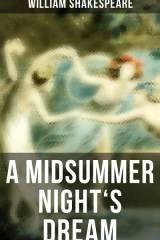
A Midsummer Night’s Dream
William Shakespeare · c. 1595 · Comedy
On Vread · 15 checkpointsLevel: intermediate160 pages · about 2 hours 50 minutes
Four young Athenians run away into a wood where the fairy king and queen are quarrelling; a love potion lands in the wrong eyes, and a weaver ends up with a donkey’s head.
Why it’s on the list: A comedy with short scenes and a plot that is easy to follow: a common first Shakespeare play. The catalogue edition has a checkpoint about every ten pages, which helps with a first go at verse.
“High-quality works from English literature: pre-1914”
Prose, poetry and drama written before 1914, the writing GCSE English Literature later builds on.
The Hound of the Baskervilles
Arthur Conan Doyle · 1902 · Detective novel
On Vread · 7 checkpointsLevel: intermediate279 pages · about 5 hours
A family legend, a death on the moor and the footprints of a gigantic hound: Sherlock Holmes sends Dr Watson to Dartmoor to protect the new heir.
Why it’s on the list: A story that pulls you forward, written in the long sentences of the early 1900s: a good bridge from children’s fiction to older prose. Oak National Academy’s Year 7 includes Sherlock Holmes stories.
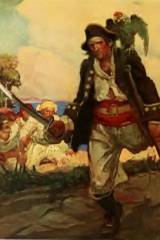
Treasure Island
Robert Louis Stevenson · 1883 · Adventure novel
On Vread · 7 checkpointsLevel: intermediate280 pages · about 5 hours
Jim Hawkins finds a map in a dead pirate’s sea chest and sails to find the treasure, with a one-legged ship’s cook called Long John Silver on board.
Why it’s on the list: The model for pirate stories ever since. Jim tells the story himself, which keeps 1880s English close to a young reader.
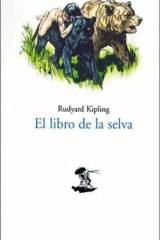
The Jungle Book
Rudyard Kipling · 1894 · Short stories
On Vread · 6 checkpointsLevel: intermediate185 pages · about 3 hours 20 minutes
Mowgli, a boy raised by wolves, learns the Law of the Jungle from Baloo and Bagheera; other stories follow a mongoose in an Indian garden and a white seal.
Why it’s on the list: Short stories, which the curriculum names alongside whole books, and an easy way into pre-1914 writing one story at a time. Also meets “A wide range of fiction and non-fiction”.
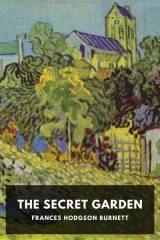
The Secret Garden
Frances Hodgson Burnett · 1911 · Novel
On Vread · 9 checkpointsLevel: intermediate300 pages · about 5 hours 30 minutes
Sent to her uncle’s house on the Yorkshire moors, the spoilt orphan Mary Lennox finds a locked garden and, somewhere in the house, a cousin nobody talks about.
Why it’s on the list: A pre-1914 novel about two difficult children who change, with Yorkshire dialect to read aloud and talk about.
“High-quality works from English literature: contemporary”
Recent writing. We also file here 20th-century modern classics often read before GCSE.
Holes
Louis Sachar · 1998 · Novel
On Vread · 5 checkpointsLevel: accessible233 pages · about 4 hours 10 minutes
Wrongly sent to a desert camp where every boy digs one hole a day, Stanley Yelnats starts to suspect that the Warden is looking for something.
Why it’s on the list: Three stories from three time periods that click together at the end: accessible, and rewarding to talk about once finished.
Coraline
Neil Gaiman · 2002 · Novella
On Vread · 4 checkpointsLevel: accessible160 pages · about 2 hours 50 minutes
Behind a bricked-up door in her new flat, Coraline finds a copy of her home and an Other Mother who has buttons for eyes and wants her to stay.
Why it’s on the list: Short and properly creepy: a first taste of Gothic and suspense, which Year 8 often studies.
The Lightning Thief
Rick Riordan · 2005 · Novel
On Vread · 9 checkpointsLevel: accessible377 pages · about 6 hours 50 minutes
Percy Jackson, twelve, learns that his father is the Greek god Poseidon, and that he is accused of stealing Zeus’s master lightning bolt.
Why it’s on the list: Greek myths retold as a modern adventure: it pairs with the myths and legends often studied in Years 7 and 8.
Wonder
R. J. Palacio · 2012 · Novel
Not on Vread yetLevel: accessibleMedium-length novel
Auggie Pullman, born with a facial difference and taught at home until now, starts school for the first time; other chapters are told by the people around him.
Why it’s on the list: A book about starting a new school, told by several narrators who see the same events differently.
“Seminal world literature”
Landmark books from beyond Britain, written in English or read in translation.
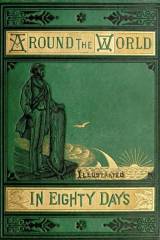
Around the World in Eighty Days
Jules Verne · 1872 · Adventure novel (in translation)
On Vread · 7 checkpointsLevel: intermediate241 pages · about 4 hours 20 minutes
Phileas Fogg bets half his fortune that he can travel round the world in eighty days, and leaves London that same evening with his new servant, Passepartout.
Why it’s on the list: A classic read in translation, and a race against the clock with a twist on the last pages.
“A wide range of fiction and non-fiction”
Whole books, short stories, poems and plays, and non-fiction such as memoirs and diaries.
Goblin Market
Christina Rossetti · 1862 · Narrative poem
Not on Vread yetLevel: intermediateLong poem
Two sisters hear the goblin men crying their fruit by the brook at dusk; Laura buys and eats, then starts to waste away, and Lizzie goes to the goblins to save her.
Why it’s on the list: A narrative poem with a fairy-tale plot: a way into pre-1914 poetry through story, rhythm and repetition. Also meets “High-quality works from English literature: pre-1914”.
Pages and reading times: the Vread catalogue edition, checked on 10 October 2026; your edition may differ. Time estimated for an average reader.
How Vread helps
Read the whole book, one step at a time
Pick the book in the app and read your own copy, on paper or on a screen.
Every 30 to 40 pages, a checkpoint asks you a question about the section. A right answer validates it.
Your progress shows: validated sections, reading streaks, finished books.
The Hound of the Baskervilles, Arthur Conan Doyle
What was Sir Charles Baskerville smoking during his nightly walk in the Yew Alley?
The answer is in the text: reply in the app.

National curriculum · Key Stage 3
What the KS3 English curriculum asks pupils to read
The programme of study covers Years 7 to 9 as a whole. It names kinds of reading, not titles: the books are chosen by each school.
“Shakespeare (2 plays)”
Two plays across Years 7 to 9. The curriculum names none: which ones, and when, is up to the school.
“High-quality works from English literature: pre-1914”
Prose, poetry and drama written before 1914, the writing GCSE English Literature later builds on.
“High-quality works from English literature: contemporary”
Recent writing. We also file here 20th-century modern classics often read before GCSE.
“Seminal world literature”
Landmark books from beyond Britain, written in English or read in translation.
“A wide range of fiction and non-fiction”
Whole books, short stories, poems and plays, and non-fiction such as memoirs and diaries.
Pupils should also choose books on their own “for challenge, interest and enjoyment”, reread books met earlier, and study at least two authors in depth each year.
From September 2028
After the Curriculum and Assessment Review, the government plans to publish a revised national curriculum in spring 2027, taught from September 2028, and has committed to a statutory reading assessment in Year 8. For 2026–27, the 2014 programme of study applies.
Sources: Curriculum and Assessment Review final report: government response (Department for Education, November 2025); What you need to know about the changes to the national curriculum (DfE Education Hub, November 2025).
Parents and teachers
Know whether the book was really read
A summary takes two minutes to find. What an adult cannot easily check is the reading itself.
For parents
Your child reads their own copy and, every 30 to 40 pages, answers a question about the section. You see what has been validated and what is left, without having to quiz them yourself.
Follow your children’s reading: the Family Plan (coming soon)
For teachers
For independent reading, you choose the book and see who has validated which sections, without marking thirty reading logs. Questions are about details of the text.
A right answer shows that a section was read, not that it was analysed: it complements the work done in class.
Year 7 reading: frequently asked questions
How many books should a Year 7 pupil read?
Which Shakespeare play is best for Year 7?
My child finds older books hard. Where should we start?
How can I tell whether my child has actually read the book?
Curriculum: National curriculum in England: English programmes of study, key stage 3 (Department for Education, updated 16 July 2014). Year-by-year sequence used as a reference: Oak National Academy: secondary English curriculum, units for Years 7 to 9.
Vread catalogue checked on 10 October 2026. Book descriptions written by Vread.
Vread is an independent app. It is not affiliated with, endorsed by or approved by the Department for Education or Oak National Academy. The requirements quoted come from the published national curriculum; the choice of books on these pages is ours.
Prove you’ve read it.
A question every 30 to 40 pages, free on Vread.