Key Stage 3 · Ages 12–13 · 2026–27
Year 8 reading list: 12 books for the middle of Key Stage 3
Gothic stories, Victorian science fiction, poems and a second Shakespeare play. Each book is matched to a KS3 reading requirement, with its level and length.
9 / 12
Books on this list already on Vread with their questions, as of 10 October 2026.
Year 8 in English
Year 8 often goes further into genre: Gothic fiction, myths and legends, a single-poet study and a second Shakespeare play.
The list · Year 8
The 12 books, by curriculum requirement
Each book is matched to a reading requirement of the KS3 English curriculum. Links go to the book’s Vread page; books without a link are not in the app yet.
“Shakespeare (2 plays)”
Two plays across Years 7 to 9. The curriculum names none: which ones, and when, is up to the school.
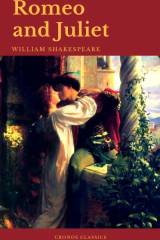
Romeo and Juliet
William Shakespeare · c. 1595 · Tragedy
On Vread · 3 checkpointsLevel: intermediate100 pages · about 1 hour 50 minutes
Two teenagers from feuding families in Verona marry in secret; within a few days, a street fight and a message that never arrives turn it into tragedy.
Why it’s on the list: Many pupils meet it in KS3, and it is also a GCSE set text for AQA, Edexcel and OCR: reading it once early makes the GCSE year easier.
The Tempest
William Shakespeare · c. 1611 · Play
Not on Vread yetLevel: intermediatePlay in five acts
Prospero, a duke exiled to an island with his daughter Miranda, uses magic to wreck his enemies’ ship on its shore, then decides what to do with them.
Why it’s on the list: Often taught in KS3: Oak National Academy’s curriculum places it in Year 7. A late play about power, revenge and forgiveness.
“High-quality works from English literature: pre-1914”
Prose, poetry and drama written before 1914, the writing GCSE English Literature later builds on.
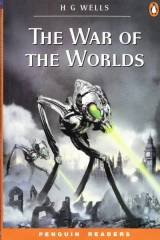
The War of the Worlds
H. G. Wells · 1898 · Science-fiction novel
On Vread · 5 checkpointsLevel: intermediate300 pages · about 5 hours 30 minutes
Cylinders from Mars land on Horsell Common in Surrey, and the narrator watches tripod fighting machines and their heat-rays destroy the towns around London.
Why it’s on the list: Pre-1914 science fiction set in real English places, useful for descriptive writing about settings. It is also a GCSE set text for OCR.
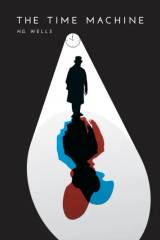
The Time Machine
H. G. Wells · 1895 · Novella
On Vread · 4 checkpointsLevel: intermediate120 pages · about 2 hours 10 minutes
A Victorian inventor travels to the year 802,701 and finds the gentle Eloi living above ground, and the Morlocks in the dark beneath them.
Why it’s on the list: Short, and full of ideas about class and the future to argue about in class.
“High-quality works from English literature: contemporary”
Recent writing. We also file here 20th-century modern classics often read before GCSE.
The Woman in Black
Susan Hill · 1983 · Ghost story
On Vread · 5 checkpointsLevel: intermediate173 pages · about 3 hours 10 minutes
A young solicitor is sent to sort a dead widow’s papers at Eel Marsh House, cut off from the town at every high tide; at her funeral, he sees a woman in black.
Why it’s on the list: A modern novel written like a Victorian ghost story: the Gothic conventions are easy to spot and discuss. It is also a GCSE set text for Edexcel.
The Graveyard Book
Neil Gaiman · 2008 · Novel
On Vread · 7 checkpointsLevel: accessible247 pages · about 4 hours 30 minutes
A toddler escapes the man who killed his family and is brought up by the ghosts of a hilltop graveyard, who name him Nobody Owens.
Why it’s on the list: Each chapter jumps two years and almost works as a short story: an easy way to talk about structure and time.
A Monster Calls
Patrick Ness, from an idea by Siobhan Dowd · 2011 · Novel
On Vread · 4 checkpointsLevel: intermediate123 pages · about 2 hours 10 minutes
While his mother is seriously ill, Conor is visited at seven minutes past midnight by a monster from the yew tree, which tells him three stories and then asks for his.
Why it’s on the list: Short and powerful, about grief and anger. Worth a word with your child first, as it deals with serious illness and loss.
“Seminal world literature”
Landmark books from beyond Britain, written in English or read in translation.
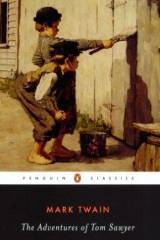
The Adventures of Tom Sawyer
Mark Twain · 1876 · Novel
On Vread · 9 checkpointsLevel: intermediate250 pages · about 4 hours 30 minutes
In a town on the Mississippi, Tom tricks his friends into whitewashing a fence, runs away to play pirates, and sees a murder in the graveyard at midnight.
Why it’s on the list: An American classic with a funny, mischievous hero, and a way into 19th-century dialogue written in dialect.
The Diary of a Young Girl
Anne Frank · 1947 · Diary (in translation)
On Vread · 10 checkpointsLevel: intermediate352 pages · about 6 hours 20 minutes
From 1942 to 1944, a Jewish teenager hiding with her family in a secret annex in Amsterdam writes about the people around her, her fears and her wish to become a writer.
Why it’s on the list: Non-fiction and world literature at once: a first-hand account that links English with the history taught in KS3. Also meets “A wide range of fiction and non-fiction”.
The Outsiders
S. E. Hinton · 1967 · Novel
On Vread · 6 checkpointsLevel: accessible192 pages · about 3 hours 30 minutes
Ponyboy, fourteen, runs with the Greasers, poor boys always at war with the rich Socs, until a fight in a park at night ends with a death.
Why it’s on the list: Written when its author was a teenager: short, fast, and about loyalty, class and violence. Also meets “High-quality works from English literature: contemporary”.
“A wide range of fiction and non-fiction”
Whole books, short stories, poems and plays, and non-fiction such as memoirs and diaries.
The Rime of the Ancient Mariner
Samuel Taylor Coleridge · 1798 · Narrative poem
Not on Vread yetLevel: challengingLong poem
An old sailor stops a guest on his way to a wedding to tell how he shot an albatross, and how his ship and its crew paid for it.
Why it’s on the list: Romantic poetry told as a story, with strong images and sounds to annotate. Also meets “High-quality works from English literature: pre-1914”.
And Still I Rise
Maya Angelou · 1978 · Poetry collection
Not on Vread yetLevel: intermediateShort poetry collection
Angelou’s third collection of poems, which includes “Still I Rise” and “Phenomenal Woman”: poems written to be spoken aloud.
Why it’s on the list: Oak National Academy’s Year 8 includes a single-poet study of Maya Angelou. These poems are meant to be read aloud. Also meets “Seminal world literature”.
Pages and reading times: the Vread catalogue edition, checked on 10 October 2026; your edition may differ. Time estimated for an average reader.
How Vread helps
Read the whole book, one step at a time
Pick the book in the app and read your own copy, on paper or on a screen.
Every 30 to 40 pages, a checkpoint asks you a question about the section. A right answer validates it.
Your progress shows: validated sections, reading streaks, finished books.
The Time Machine, H. G. Wells
According to the Time Traveller, what material are the cracked bars of his machine made of?
The answer is in the text: reply in the app.

National curriculum · Key Stage 3
What the KS3 English curriculum asks pupils to read
The programme of study covers Years 7 to 9 as a whole. It names kinds of reading, not titles: the books are chosen by each school.
“Shakespeare (2 plays)”
Two plays across Years 7 to 9. The curriculum names none: which ones, and when, is up to the school.
“High-quality works from English literature: pre-1914”
Prose, poetry and drama written before 1914, the writing GCSE English Literature later builds on.
“High-quality works from English literature: contemporary”
Recent writing. We also file here 20th-century modern classics often read before GCSE.
“Seminal world literature”
Landmark books from beyond Britain, written in English or read in translation.
“A wide range of fiction and non-fiction”
Whole books, short stories, poems and plays, and non-fiction such as memoirs and diaries.
Pupils should also choose books on their own “for challenge, interest and enjoyment”, reread books met earlier, and study at least two authors in depth each year.
From September 2028
After the Curriculum and Assessment Review, the government plans to publish a revised national curriculum in spring 2027, taught from September 2028, and has committed to a statutory reading assessment in Year 8. For 2026–27, the 2014 programme of study applies.
Sources: Curriculum and Assessment Review final report: government response (Department for Education, November 2025); What you need to know about the changes to the national curriculum (DfE Education Hub, November 2025).
Parents and teachers
Know whether the book was really read
A summary takes two minutes to find. What an adult cannot easily check is the reading itself.
For parents
Your child reads their own copy and, every 30 to 40 pages, answers a question about the section. You see what has been validated and what is left, without having to quiz them yourself.
Follow your children’s reading: the Family Plan (coming soon)
For teachers
For independent reading, you choose the book and see who has validated which sections, without marking thirty reading logs. Questions are about details of the text.
A right answer shows that a section was read, not that it was analysed: it complements the work done in class.
Year 8 reading: frequently asked questions
What do pupils read in Year 8 English?
Is Romeo and Juliet too early in Year 8?
Are these books suitable for a 12-year-old?
How can I tell whether my child has actually read the book?
Curriculum: National curriculum in England: English programmes of study, key stage 3 (Department for Education, updated 16 July 2014). Year-by-year sequence used as a reference: Oak National Academy: secondary English curriculum, units for Years 7 to 9.
Vread catalogue checked on 10 October 2026. Book descriptions written by Vread.
Vread is an independent app. It is not affiliated with, endorsed by or approved by the Department for Education or Oak National Academy. The requirements quoted come from the published national curriculum; the choice of books on these pages is ours.
Prove you’ve read it.
A question every 30 to 40 pages, free on Vread.