Key Stage 3 · Ages 13–14 · 2026–27
Year 9 reading list: 13 books before GCSE
Tragedy, dystopia, war poetry and world literature: longer and more demanding books to finish Key Stage 3. Each one is matched to a KS3 reading requirement.
11 / 13
Books on this list already on Vread with their questions, as of 10 October 2026.
Year 9 in English
Year 9 prepares for GCSE: a tragedy, a modern classic, war poetry and books that ask bigger questions about power and society.
The list · Year 9
The 13 books, by curriculum requirement
Each book is matched to a reading requirement of the KS3 English curriculum. Links go to the book’s Vread page; books without a link are not in the app yet.
“Shakespeare (2 plays)”
Two plays across Years 7 to 9. The curriculum names none: which ones, and when, is up to the school.
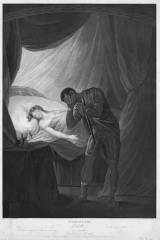
Othello
William Shakespeare · c. 1603 · Tragedy
On Vread · 4 checkpointsLevel: challenging120 pages · about 2 hours 10 minutes
Iago, passed over for promotion, persuades the general Othello that his wife Desdemona is unfaithful, with a lost handkerchief as his only proof.
Why it’s on the list: Oak National Academy’s curriculum places it in Year 9: a tragedy about jealousy, race and manipulation, ahead of GCSE Shakespeare.
“High-quality works from English literature: pre-1914”
Prose, poetry and drama written before 1914, the writing GCSE English Literature later builds on.
The Picture of Dorian Gray
Oscar Wilde · 1890 · Novel
On Vread · 10 checkpointsLevel: challenging254 pages · about 4 hours 40 minutes
A beautiful young man wishes that his portrait would grow old instead of him; as he becomes crueller, only the painting shows it.
Why it’s on the list: A Gothic idea in an elegant style, for confident readers before the 19th-century novel at GCSE.
The Importance of Being Earnest
Oscar Wilde · 1895 · Comedy
On Vread · 3 checkpointsLevel: intermediate75 pages · about 1 hour 20 minutes
Two young men invent other identities to escape their duties, and both end up claiming that their name is Ernest.
Why it’s on the list: A pre-1914 play that is still funny on the page, and short enough to read in a week. Also meets “A wide range of fiction and non-fiction”.
“High-quality works from English literature: contemporary”
Recent writing. We also file here 20th-century modern classics often read before GCSE.
Lord of the Flies
William Golding · 1954 · Novel
On Vread · 7 checkpointsLevel: intermediate225 pages · about 4 hours 10 minutes
After a plane crash, a group of British schoolboys are alone on a tropical island; their attempt to keep order slowly gives way to fear and violence.
Why it’s on the list: Oak National Academy’s Year 9 studies it, and it is a GCSE set text for AQA and Edexcel. A modern classic about order and violence.
Animal Farm
George Orwell · 1945 · Fable
On Vread · 4 checkpointsLevel: intermediate112 pages · about 2 hours
The animals of Manor Farm drive out the farmer and run the farm themselves, until the pigs begin to rewrite the rules.
Why it’s on the list: A short fable to talk about power and propaganda; it is also a GCSE set text for AQA, Edexcel and OCR.
The Curious Incident of the Dog in the Night-Time
Mark Haddon · 2003 · Novel
On Vread · 7 checkpointsLevel: intermediate226 pages · about 4 hours 10 minutes
Christopher, fifteen, finds his neighbour’s dog killed with a garden fork and decides to investigate, as Sherlock Holmes would.
Why it’s on the list: An unusual narrator and a mystery to solve: a good book for discussing point of view.
Small Island
Andrea Levy · 2004 · Novel
Not on Vread yetLevel: challengingLong novel
In 1948, Hortense and Gilbert come to London from Jamaica; their story crosses that of their landlady, Queenie, and of her husband, back from the war.
Why it’s on the list: Oak National Academy’s Year 9 studies it: it brings the Windrush generation and post-war Britain into the English classroom.
“Seminal world literature”
Landmark books from beyond Britain, written in English or read in translation.
To Kill a Mockingbird
Harper Lee · 1960 · Novel
On Vread · 11 checkpointsLevel: challenging281 pages · about 5 hours 10 minutes
In 1930s Alabama, Scout Finch watches her father, the lawyer Atticus, defend a Black man falsely accused of rape.
Why it’s on the list: American fiction about racism and justice seen through a child’s eyes. It contains racist language that is best discussed with an adult or in class.
Of Mice and Men
John Steinbeck · 1937 · Novella
On Vread · 3 checkpointsLevel: intermediate107 pages · about 2 hours
George and Lennie, two migrant workers in 1930s California, dream of owning a small farm, but Lennie’s strength keeps getting them into trouble.
Why it’s on the list: A short American classic about friendship and loneliness, in six chapters.
Things Fall Apart
Chinua Achebe · 1958 · Novel
On Vread · 6 checkpointsLevel: challenging209 pages · about 3 hours 50 minutes
Okonkwo, a proud wrestler and farmer in an Igbo village, sees his world break apart when British missionaries and administrators arrive.
Why it’s on the list: A founding novel of modern African literature in English: world literature in the full sense the curriculum asks for.
Fahrenheit 451
Ray Bradbury · 1953 · Novel
On Vread · 5 checkpointsLevel: intermediate158 pages · about 2 hours 50 minutes
Guy Montag is a fireman whose job is to burn books, until a young neighbour asks him whether he is happy.
Why it’s on the list: Dystopian fiction about reading itself, which pairs well with dystopian writing units.
“A wide range of fiction and non-fiction”
Whole books, short stories, poems and plays, and non-fiction such as memoirs and diaries.
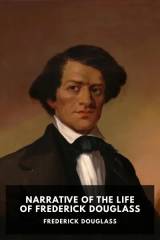
Narrative of the Life of Frederick Douglass
Frederick Douglass · 1845 · Autobiography
On Vread · 5 checkpointsLevel: challenging120 pages · about 2 hours 10 minutes
Douglass describes his life enslaved in Maryland, how he taught himself to read in secret, and the fight that made him decide to be free.
Why it’s on the list: Pre-1914 non-fiction: an argument as much as a life story, and a model for writing to persuade. Also meets “Seminal world literature”.
Poems
Wilfred Owen · 1920 · Poetry collection
Not on Vread yetLevel: challengingShort poetry collection
Published after Owen was killed in November 1918, a week before the Armistice: “Dulce et Decorum Est”, “Anthem for Doomed Youth”, “Exposure”.
Why it’s on the list: First World War poetry is a frequent Year 9 unit, including in Oak’s curriculum. Short poems, dense with images.
Pages and reading times: the Vread catalogue edition, checked on 10 October 2026; your edition may differ. Time estimated for an average reader.
How Vread helps
Read the whole book, one step at a time
Pick the book in the app and read your own copy, on paper or on a screen.
Every 30 to 40 pages, a checkpoint asks you a question about the section. A right answer validates it.
Your progress shows: validated sections, reading streaks, finished books.
Othello, William Shakespeare
According to the stories Othello told Desdemona, what people did he encounter who eat each other?
The answer is in the text: reply in the app.

National curriculum · Key Stage 3
What the KS3 English curriculum asks pupils to read
The programme of study covers Years 7 to 9 as a whole. It names kinds of reading, not titles: the books are chosen by each school.
“Shakespeare (2 plays)”
Two plays across Years 7 to 9. The curriculum names none: which ones, and when, is up to the school.
“High-quality works from English literature: pre-1914”
Prose, poetry and drama written before 1914, the writing GCSE English Literature later builds on.
“High-quality works from English literature: contemporary”
Recent writing. We also file here 20th-century modern classics often read before GCSE.
“Seminal world literature”
Landmark books from beyond Britain, written in English or read in translation.
“A wide range of fiction and non-fiction”
Whole books, short stories, poems and plays, and non-fiction such as memoirs and diaries.
Pupils should also choose books on their own “for challenge, interest and enjoyment”, reread books met earlier, and study at least two authors in depth each year.
From September 2028
After the Curriculum and Assessment Review, the government plans to publish a revised national curriculum in spring 2027, taught from September 2028, and has committed to a statutory reading assessment in Year 8. For 2026–27, the 2014 programme of study applies.
Sources: Curriculum and Assessment Review final report: government response (Department for Education, November 2025); What you need to know about the changes to the national curriculum (DfE Education Hub, November 2025).
Parents and teachers
Know whether the book was really read
A summary takes two minutes to find. What an adult cannot easily check is the reading itself.
For parents
Your child reads their own copy and, every 30 to 40 pages, answers a question about the section. You see what has been validated and what is left, without having to quiz them yourself.
Follow your children’s reading: the Family Plan (coming soon)
For teachers
For independent reading, you choose the book and see who has validated which sections, without marking thirty reading logs. Questions are about details of the text.
A right answer shows that a section was read, not that it was analysed: it complements the work done in class.
Year 9 reading: frequently asked questions
How does Year 9 prepare for GCSE English Literature?
Should my child read the GCSE set texts in Year 9?
Are To Kill a Mockingbird and Of Mice and Men GCSE texts?
How can I tell whether my child has actually read the book?
Curriculum: National curriculum in England: English programmes of study, key stage 3 (Department for Education, updated 16 July 2014). Year-by-year sequence used as a reference: Oak National Academy: secondary English curriculum, units for Years 7 to 9.
Vread catalogue checked on 10 October 2026. Book descriptions written by Vread.
Vread is an independent app. It is not affiliated with, endorsed by or approved by the Department for Education or Oak National Academy. The requirements quoted come from the published national curriculum; the choice of books on these pages is ours.
Prove you’ve read it.
A question every 30 to 40 pages, free on Vread.